
🇬🇧 English – The Bodily Map of Emotions is a visual model illustrating how emotions such as anger, sadness, guilt and joy are commonly experienced in the body.
🇭🇺 Magyar – Az Érzelmek Testi Atlasza egy vizuális modell, amely bemutatja, hogy az olyan alapvető érzelmek, mint a harag, szomorúság, bűntudat és öröm hogyan jelenhetnek meg testi érzetek formájában.
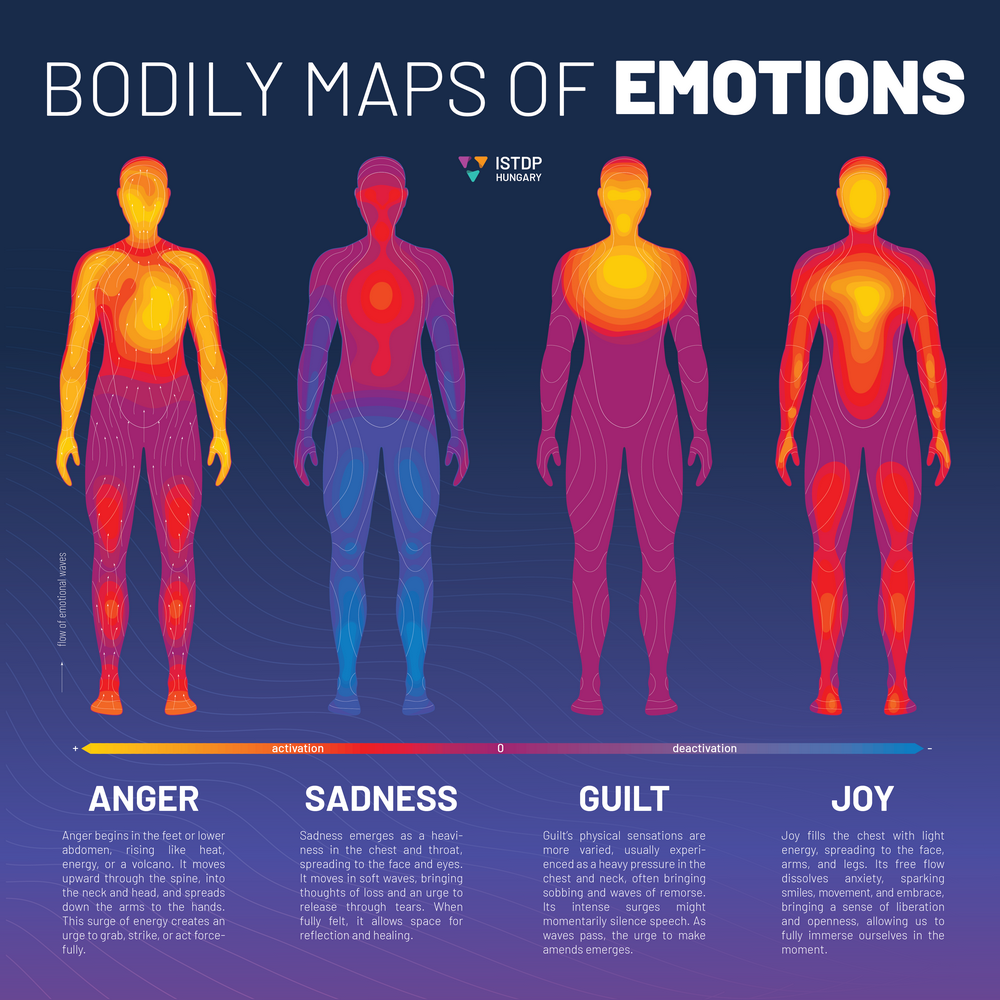
The Bodily Map of Emotions is a visual model illustrating how different emotions tend to be experienced in the body. The map highlights common somatic patterns associated with anger, sadness, guilt, and joy, and was designed as a psychoeducational tool to help people recognize emotional activation through bodily awareness. By visually linking emotional states to bodily sensations, the model supports a deeper understanding of how emotions are felt, regulated, and processed.
This page presents the official reference version of the Bodily Map of Emotions used in educational settings and psychotherapy training.
The Bodily Map of Emotions
While the Bodily Map of Emotions illustrates how specific emotions may be experienced somatically across the body, the ISTDP Anxiety Atlas describes the physiological pathways through which anxiety generated by unconscious emotional conflict may be discharged in the body.
What is the Bodily Map of Emotions?
The Bodily Map of Emotions was developed to help people identify and connect with their emotional experience on a physical level. Many individuals recognize emotions cognitively but have difficulty perceiving the bodily sensations that accompany them. However, emotions are not purely mental events; they involve complex physiological processes that manifest in the body.
The map visualizes commonly reported somatic patterns associated with specific emotions. These patterns are not universal or diagnostic but represent frequently observed tendencies in both scientific research and clinical practice.
The model was originally created as part of emotion management training programs for lay audiences and psychotherapy students. Its goal is to offer an accessible visual framework that helps individuals observe where emotional activation may appear in the body and how emotional experiences can shift across different bodily regions.
Scientific Background
The Bodily Map of Emotions draws on research from affective neuroscience and psychology that examines how emotions are experienced somatically.
One influential line of research comes from studies on bodily maps of subjective feelings, which demonstrate that people consistently report distinct bodily activation patterns associated with different emotions. For example, research by Nummenmaa and colleagues (2013, 2018) showed that emotions such as anger, sadness, fear, and happiness are associated with characteristic distributions of bodily activation and deactivation across participants from different cultures.
Additional work by Volynets et al. (2020) further explored how emotional and physiological processes interact with bodily awareness and subjective feeling states.
In psychotherapy, similar observations have long been noted clinically. Many therapeutic approaches emphasize that emotions are experienced through bodily sensations such as tension, warmth, heaviness, pressure, or energy. Recognizing these signals can help individuals name and regulate emotional states.
The present map integrates findings from affective neuroscience with clinical observations from psychotherapy practice, particularly within Intensive Short-Term Dynamic Psychotherapy (ISTDP). Its development was further informed by discussions within the ISTDP community and by consultations with leading ISTDP clinicians, including Allan Abbass and Jon Frederickson, whose clinical work has significantly shaped contemporary understanding of emotional processes in psychotherapy.
A related model describing how emotional conflict is expressed physiologically is the ISTDP Anxiety Atlas, which maps the three primary pathways through which unconscious anxiety is discharged in the body.
Emotions Represented in the Map
Anger
Anger is typically associated with increased bodily activation and mobilization. It often begins as a rising energy in the body, sometimes described as heat or pressure originating in the abdomen or lower body. This energy can move upward through the torso and toward the arms, hands, and face, reflecting the body’s preparation for action. Muscular tension, increased heart rate, and warmth are commonly reported sensations. This surge of energy creates an urge to grab, strike, or act forcefully.
Sadness
Sadness is frequently experienced as a sense of heaviness or downward movement in the body. Many people describe pressure or tightness in the chest and throat, along with decreased energy in the limbs. Tears, a lump in the throat, and slowed movement can accompany this emotional state. Compared with anger, sadness often involves reduced activation and a withdrawal of energy. When fully felt, it allows space for reflection and healing.
Guilt
Guilt tends to produce more variable bodily sensations. Many individuals report pressure or discomfort in the upper chest or throat, sometimes accompanied by tension in the neck or face. The emotion may be associated with inward-focused attention, remorse, and the urge to repair or make amends. In clinical settings, guilt is often experienced alongside sadness or anxiety, which can influence its bodily expression.
Joy
Joy is typically associated with widespread bodily activation that feels light, warm, and expansive. Sensations may begin in the chest and spread through the face, arms, and body. Smiling, laughter, spontaneous movement, and a feeling of openness are common expressions of joy. Unlike many other emotions, joy often involves both activation and a sense of ease or release.
Joy was selected for the map rather than love because it tends to have clearer and more universal bodily expressions, making it easier to depict visually.
Relation to Psychotherapy and ISTDP
In psychotherapy, developing awareness of bodily sensations can play an important role in emotional processing. Many therapeutic approaches recognize that emotions emerge not only as thoughts but also as physical experiences.
Within Intensive Short-Term Dynamic Psychotherapy (ISTDP) and other experiential therapies, clinicians often track how emotions are experienced somatically. Bodily signals may indicate emotional activation, anxiety, or defensive processes. Learning to recognize these signals can help individuals tolerate and regulate emotional experiences more effectively.
Although the Bodily Map of Emotions was not designed as a diagnostic model, it can serve as a useful educational reference in psychotherapy training, psychoeducation, and emotional awareness exercises.
How the Map Can Be Used
The Bodily Map of Emotions can support several applications:
- Psychotherapy and counseling – helping clients notice and describe emotional sensations in the body
- Psychoeducation – teaching emotional awareness and emotion regulation skills
- Training programs – supporting therapists, students, and coaches in recognizing somatic aspects of emotion
- Self-awareness practices – helping individuals track emotional states through bodily signals
By linking emotional experiences to bodily sensations, the map encourages individuals to move beyond purely cognitive descriptions of emotions and toward a more embodied understanding of their feelings.
Limitations
The Bodily Map of Emotions represents simplified patterns rather than universal truths. Emotional experiences are influenced by many factors, including culture, personality, past experiences, and psychological context.
Individual variations in how emotions are felt in the body can be substantial. The map therefore should not be interpreted as a diagnostic or clinical assessment tool. Instead, it provides a visual framework for exploring how emotions may manifest physically.
Future versions of the map may include additional emotions and refinements based on feedback from clinicians, researchers, and users.
Download
High-resolution PDF version available for educational use.
Suggested Citation
Tamás, K. (2026). Bodily Map of Emotions. Available at: https://istdp.hu/bodily-map-of-emotions
Usage and Reproduction
This page hosts the official version of the Bodily Map of Emotions. The image may be used for educational and training purposes with proper attribution.
When reproducing the image, please include the following credit: Bodily Map of Emotions. Image used courtesy of Katalin Tamás – https://istdp.hu. For reproduction permissions or high-resolution files please contact: hello@istdp.hu
References
- Nummenmaa, L., Glerean, E., Hari, R., & Hietanen, J. (2013). Bodily maps of emotions. Proceedings of the National Academy of Sciences.
- Nummenmaa, L., et al. (2018). Emotional feelings correspond to distributed patterns of brain activity and bodily sensations.
- Volynets, S., et al. (2020). Mapping bodily sensations associated with emotions.
- Abbass, A. (2015). Reaching Through Resistance: Advanced Psychotherapy Techniques.
Related ISTDP models
- ISTDP Anxiety Atlas – pathways of unconscious anxiety in the body
- Triangle of Conflict – the dynamic relationship between feelings, anxiety, and defenses
- Triangle of Person – patterns of emotional experience across relationships
- Central Dynamic Sequence – the therapeutic process of emotional breakthrough in ISTDP
Hungarian version / Magyar változat
Az érzelmek testi atlasza (Bodily Map of Emotions)
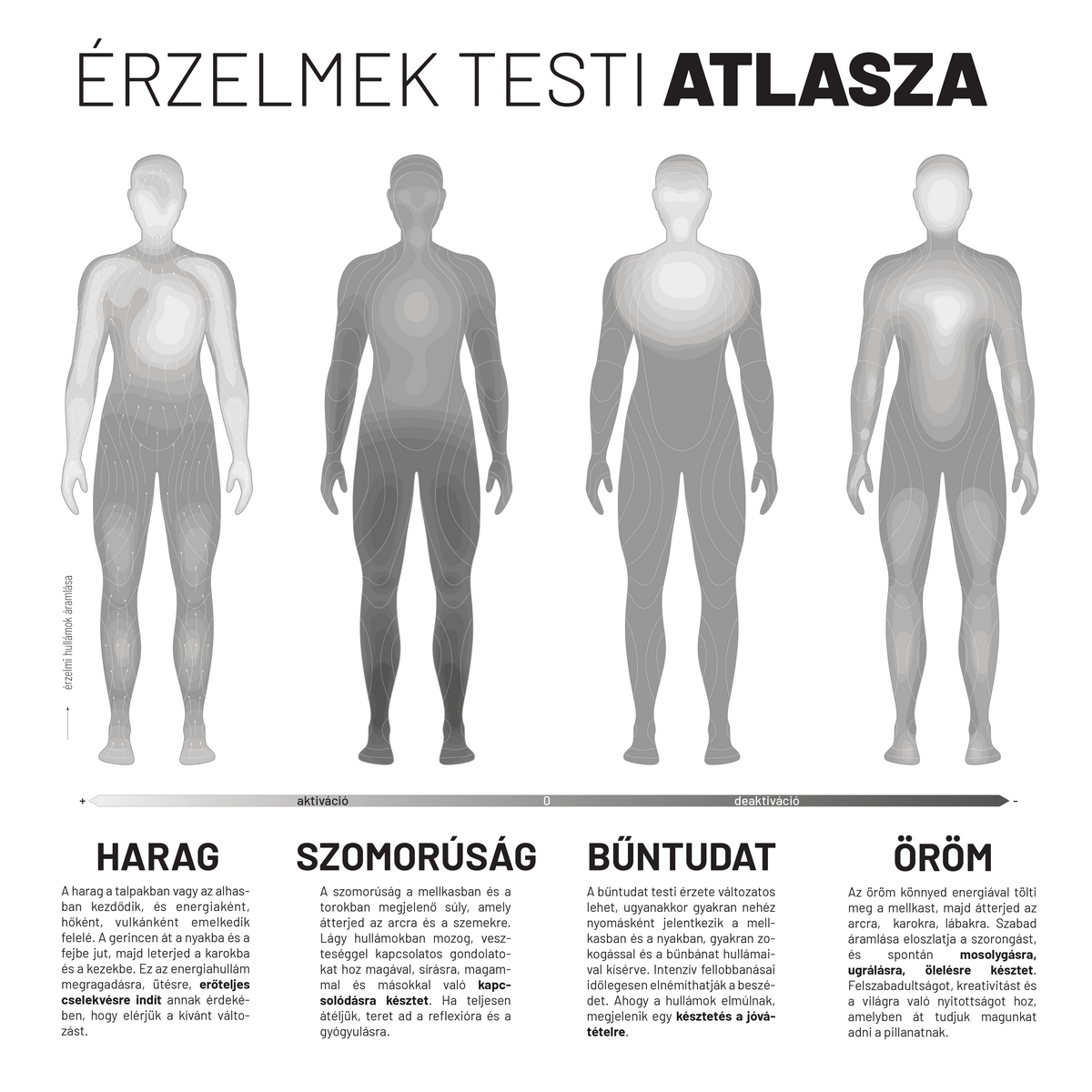
Az Érzelmek testi atlasza egy vizuális modell, amely azt mutatja be, hogy különböző érzelmek hogyan jelenhetnek meg a testben érzékelhető testi érzetek formájában. A térkép négy gyakori érzelmi állapot – harag, szomorúság, bűntudat és öröm – jellegzetes testi mintázatait szemlélteti. Célja, hogy segítse az érzelmi tudatosság fejlesztését, és megkönnyítse annak felismerését, hogy az érzelmek nemcsak gondolatokként, hanem fizikai élményként is jelen vannak a testben.
A modell eredetileg érzelemkezelési képzések és pszichoedukációs programok számára készült. Az volt a célja, hogy egy egyszerű, mégis tudományos és klinikai megfigyelésekre épülő vizuális eszközt adjon azok kezébe, akik szeretnék jobban megérteni saját érzelmi folyamataikat.
Tudományos háttér
Az érzelmek testi megjelenésével kapcsolatban az utóbbi években egyre több kutatás született az affektív idegtudomány és a pszichológia területén. Ezek közül kiemelkednek Nummenmaa és munkatársai (2013, 2018) vizsgálatai, amelyek azt mutatták, hogy különböző érzelmek esetén az emberek meglepően hasonló módon jelölik meg a test különböző területein az aktiváció vagy a csökkent aktivitás érzését. Ezeket a mintázatokat „bodily maps of emotions”, vagyis az érzelmek testi atlasza néven írták le.
További kutatások, például Volynets és munkatársai (2020) munkái, szintén alátámasztják, hogy az érzelmi élmények szorosan összekapcsolódnak a testben megjelenő fiziológiai és érzeti folyamatokkal.
A pszichoterápiás gyakorlatban hasonló megfigyelések régóta ismertek. Számos terápiás irányzat – különösen az élményközpontú és pszichodinamikus megközelítések – hangsúlyozza, hogy az érzelmek gyakran testi érzeteken keresztül válnak tudatossá. Az érzelmi élményhez kapcsolódó testi jelzések felismerése fontos lépés lehet az érzelmek megnevezése, elfogadása és szabályozása felé.
Az érzelmek testi atlasza a kutatási eredményeket pszichoterápiás klinikai megfigyelésekkel integrálja, különös tekintettel az Intenzív Rövid Dinamikus Pszichoterápia (ISTDP) tapasztalataira. A modell kialakulását az ISTDP szakmai közösségében folytatott párbeszédek is inspirálták, valamint olyan vezető klinikusokkal folytatott konzultációk, mint Allan Abbass és Jon Frederickson, akiknek munkája jelentősen hozzájárult az érzelmi folyamatok pszichoterápiás megértéséhez.
Egy ehhez kapcsolódó modell az ISTDP Szorongásatlasz, amely azt mutatja be, hogy a tudattalan érzelmi konfliktusokból származó szorongás milyen három fő csatornán keresztül jelenhet meg a testben.
Az ábrán szereplő érzelmek
Harag
A harag általában fokozott testi aktivációval jár. Sok ember úgy írja le, hogy az energia a test alsóbb részeiből – például a lábakból vagy a has területéről – indul, majd felfelé halad a törzsön keresztül a mellkas, a vállak és a karok felé. Gyakori a hőérzet, az izomfeszülés, valamint a késztetés a cselekvésre vagy a határok védelmére.
Szomorúság
A szomorúság testi élménye gyakran inkább nehézségként vagy lefelé irányuló energiaként jelenik meg. Sokan a mellkas és a torok területén érzett nyomásról, gombócról vagy szorításról számolnak be. Az energia csökkenhet a karokban és a lábakban, ami a visszahúzódás vagy a lassulás élményével társulhat.
Bűntudat
A bűntudat testi megjelenése változatosabb lehet, de gyakran a mellkas felső részén vagy a torok környékén jelentkező nyomásként vagy feszültségként írják le. Sok esetben együtt jár szomorúsággal és azzal a késztetéssel, hogy az ember jóvátegye vagy helyrehozza a kapcsolatban okozott sérülést.
Öröm
Az öröm általában kiterjedt testi aktivációval és könnyedséggel jár. Az energia gyakran a mellkas területéről indul, majd az egész testben szétárad. Az arcon mosoly jelenhet meg, a test mozgékonyabbá válhat, és sokan melegséget vagy könnyedséget éreznek a testükben.
Az öröm azért került a térképre a szeretet helyett, mert testi megjelenése általában egyszerűbben és univerzálisabban felismerhető. A szeretet ezzel szemben egy összetett, kapcsolati kontextusban megjelenő élmény, amelynek testi megnyilvánulásai sokkal változatosabbak.
Pszichoterápiás kapcsolat
A pszichoterápiában az érzelmek testi megjelenésének felismerése fontos szerepet játszhat az érzelmi feldolgozásban. Számos terápiás megközelítés – köztük az Intenzív Rövid Dinamikus Pszichoterápia (ISTDP) – hangsúlyozza, hogy az érzelmek gyakran testi érzetek formájában jelennek meg először.
A testi jelzések észlelése segíthet abban, hogy az egyén:
- felismerje, milyen érzelem aktiválódik benne
- kapcsolatba kerüljön az érzelmi élményével
- megtanulja tolerálni és szabályozni az érzelmeket
Az érzelmek testi atlasza ezért hasznos eszköz lehet pszichoedukációban, terápiás folyamatokban és képzésekben is.
Az ábra használata
Az érzelmek testi atlasza többféle módon alkalmazható:
- pszichoterápiás folyamatok támogatására
- érzelmi tudatosság fejlesztésére
- képzésekben és oktatásban
- önreflexiós vagy érzelemkövető gyakorlatokban
A térkép segíthet abban, hogy az emberek jobban felismerjék az érzelmekhez kapcsolódó testi jelzéseket, és így közelebb kerüljenek saját érzelmi folyamataik megértéséhez.
Fontos megjegyzés – Az érzelmek testtérképe nem diagnosztikai eszköz, és nem jelenti azt, hogy minden ember pontosan ugyanúgy tapasztalja meg az adott érzelmeket. Az érzelmi élményeket számos tényező – például kulturális háttér, személyes tapasztalatok és aktuális pszichológiai állapot – befolyásolhatja.
Az ábra ezért inkább általános mintázatokat szemléltet, amelyek segíthetnek az érzelmek testi aspektusainak megértésében.
Hivatkozás
Tamás, K. (2026). Érzelmek testi atlasza (Bodily Map of Emotions).
Elérhető: https://istdp.hu/bodily-map-of-emotions
Felhasználás
Az ábra hivatalos verziója ezen az oldalon található. Oktatási és képzési célokra szabadon használható megfelelő hivatkozással. Kérjük az alábbi forrást feltüntetni: Bodily Map of Emotions. Image used courtesy of Katalin Tamás – https://istdp.hu. Felhasználási kérdések esetén: hello@istdp.hu
Kapcsolódó ISTDP modellek
- ISTDP Szorongásatlasz – a tudattalan szorongás testi csatornái
- Konfliktus háromszög – érzelmek, szorongás és védekezések dinamikája
- zemély háromszög – érzelmi mintázatok különböző kapcsolatokban
- Központi dinamikus folyamat – az érzelmi áttörés folyamata az ISTDP-ben